


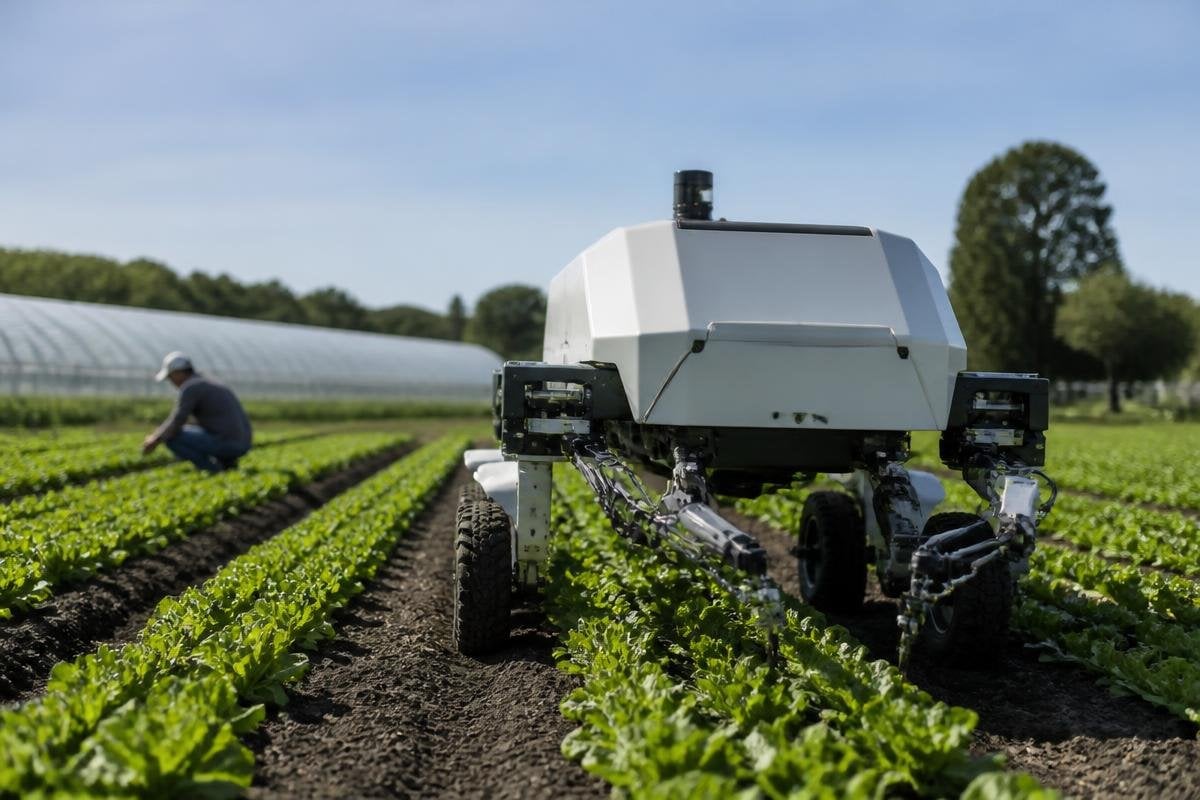
Farm robots are moving into work that depends on repeated motion, close plant checks, and steady control. Their value comes from taking on narrow jobs in fields, greenhouses, and packing areas, not from replacing an entire farm team.
- Cameras can check plants row by row
- Robotic tools can remove weeds near crops
- Autonomous vehicles can carry loads across set routes
Where robots fit on a farm
Agriculture gives robots a clear set of jobs. A machine can travel along crop rows, inspect leaves, place seeds, move containers, or carry harvested produce.
Each task has a fixed goal, which makes it easier to test than a general farm worker robot.
The robot needs a way to sense its surroundings. Cameras can record plant images, GPS can mark position across open fields, and LiDAR can measure nearby objects with laser pulses. Software then turns those readings into movement or tool commands.
That process works best when the farm gives the robot room to operate. Straight rows, marked routes, and stable ground make movement easier. Mud, loose soil, tall grass, poor lighting, and damaged plants make the same job harder because the robot has less reliable information.
What changes for farm workers
A robot that checks plants can reduce the amount of walking needed for routine inspection. A worker still decides what a damaged crop needs, but the machine can bring the first set of images to them instead of sending them across every row.
Weeding shows the same pattern. A robot may guide a small tool toward a weed after a camera spots its position. The useful result depends on how well the system tells a crop from a weed, since a small position error can damage the plant beside it.
Harvest work brings a harder test. Fruit can vary in size, color, and position, so a gripper must make contact without bruising it. A system that works on one crop and one field may need new settings for another farm.
For farm owners, this changes the cost question. The machine price is only one part of the calculation. You also need charging equipment, repairs, software support, worker training, and a plan for days when the robot cannot work.
What the evidence needs to show
Broad claims about farm robots are easy to make and hard to compare. A useful report should name the crop, task, field conditions, machine, work period, and human labor needed beside the robot.
Row spacing, operating speed, and hours in the field can decide whether a farm robot fits a crop plan. Robot24.com can add dated reports on named machines and field trials, giving those claims a concrete record before the report moves to what a video leaves out.
Without those details, a video of a robot moving through a field proves very little about farm output. It may show a controlled test, a short run, or a task with a worker outside the frame.
The open question is repeatability. A farm needs a machine to work across changing weather, soil, plant growth, and maintenance needs. One successful demonstration does not answer that question.
Limits that still matter
Farm robots face physical limits before software enters the discussion. Batteries add weight and need charging. Wheels can lose grip on wet ground. Arms and grippers need enough force to handle a crop without crushing it.
Weather also changes the job. Rain can affect cameras, traction, and soil conditions. Dust can cover sensors. Bright sun can change the image seen by a camera. A system built for a greenhouse may not work in an open field without changes.
Safety needs a clear plan too. People, animals, farm vehicles, and loose tools may share the same work area. The robot needs a safe stop, visible status signals, and a way for a worker to take control when the route becomes unsafe.
I’d wait for field results that include labor hours, crop damage, machine downtime, and repair costs before buying a robot for a large farm.
A practical buying check
Use these questions before you compare machines:
- Name the task: Pick one job with a clear start and finish.
- Check the field: Record row spacing, ground type, slope, weather, and lighting.
- Ask for field data: Request results from the same crop and working conditions.
- Count the people: Include the workers needed to load, supervise, repair, and recover the robot.
- Price the downtime: Find out what happens when charging, rain, or a fault stops work.
- Set a fallback: Keep a manual method ready for missed rows, damaged plants, and blocked routes.
The next useful step is a small trial with a measured task and a fixed work period. If the robot cuts labor time without raising crop damage or repair work, the farm has a reason to expand its use. If it cannot, the machine belongs in testing rather than in the main harvest plan.