


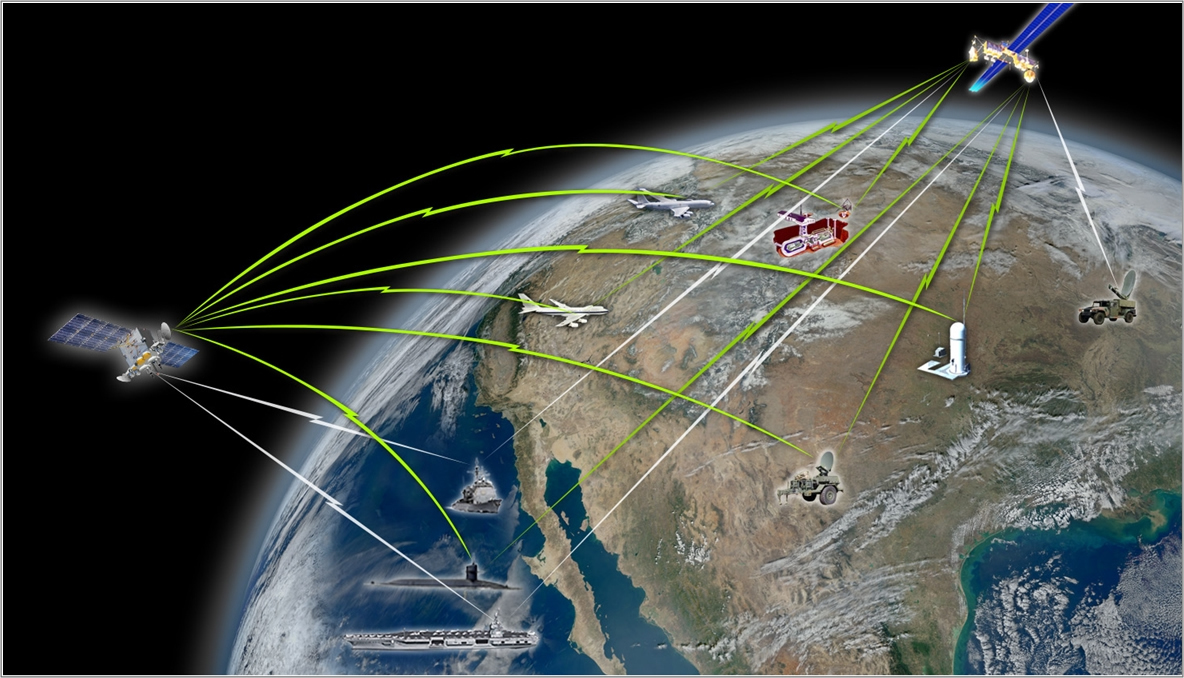
Global Navigation Satellite System (GNSS) has become a cornerstone of modern aviation, providing pilots with precise location data and enabling safer, more efficient air travel. As air traffic continues to increase and aviation systems become more advanced, GNSS has taken on an even more critical role. This article explores how GNSS technology enhances modern aviation systems, ensuring that planes can navigate the skies safely and accurately.
What is GNSS?
GNSS refers to a constellation of satellites that work together to provide global coverage for positioning, navigation, and timing services. The most well-known GNSS system include the U.S.-based GPS (Global Positioning System), Russia’s GLONASS, the European Union’s Galileo, and China’s BeiDou. Together, these systems allow users across the world to determine their precise location, which is vital for navigation in numerous industries, including aviation.
The Importance of GNSS in Aviation
Precision and Accuracy in Navigation
One of the most significant benefits of GNSS in aviation is its ability to provide highly accurate navigation data. Traditional ground-based navigation aids, like VOR (VHF Omnidirectional Range) and DME (Distance Measuring Equipment), rely on signals transmitted from fixed locations. While these systems have served aviation well, they have limitations, such as range and coverage.
GNSS, on the other hand, uses a network of satellites that are constantly orbiting the Earth, which allows for global coverage. The accuracy of GNSS has improved significantly over the years, with modern systems offering precision down to a few centimeters. This level of accuracy enables aircraft to follow predetermined flight paths with greater certainty, reducing the risk of navigational errors.
Increased Safety and Reliability
The role of GNSS in modern aviation is not just about convenience; it is also about safety. The accuracy of GNSS allows for more precise navigation, which in turn reduces the likelihood of mid-air collisions and helps aircraft avoid no-fly zones, such as restricted airspace. GNSS-based systems also enhance situational awareness for pilots, especially when flying in areas where visual references are limited, like over oceans or during inclement weather conditions.
Moreover, GNSS has made it possible for aircraft to follow more efficient flight paths, reducing fuel consumption and minimizing the chances of getting lost or deviating from the intended route. In the event of a malfunction or failure of a primary navigation system, GNSS can serve as a reliable backup.
GNSS and Air Traffic Management
Another critical aspect of GNSS in modern aviation is its role in air traffic management. As the number of aircraft in the sky grows, efficient management of air traffic becomes increasingly important. GNSS enables more precise control over flight trajectories, allowing air traffic controllers to track aircraft more accurately and efficiently. This reduces the risk of congestion and bottlenecks in busy airspaces.
Additionally, GNSS-based systems like Automatic Dependent Surveillance-Broadcast (ADS-B) provide real-time position information of aircraft, further improving situational awareness for air traffic controllers. This level of tracking enhances both the safety and capacity of airspace, especially in regions where radar coverage may be sparse or non-existent, such as remote oceanic areas.
The Future of GNSS in Aviation
Enhanced Precision with Augmentation Systems
While GNSS has already transformed aviation, the future promises even more advancements. One such development is the use of GNSS augmentation systems, such as WAAS (Wide Area Augmentation System) and EGNOS (European Geostationary Navigation Overlay Service). These systems enhance GNSS accuracy by providing correction signals that can improve positional data to an even higher level of precision.
This augmented precision is critical for advanced operations like Category III Instrument Landing Systems (ILS), which allow aircraft to land in very low-visibility conditions. As GNSS augmentation systems continue to improve, they will further bolster the ability of pilots to safely land in challenging weather, thus improving overall flight safety.
Integration with New Technologies
The role of GNSS in aviation will only continue to grow as it integrates with other emerging technologies. From unmanned aerial vehicles (UAVs) to autonomous flight systems, GNSS will serve as a critical component in ensuring that these advanced technologies can navigate safely and efficiently.
For instance, UAVs, which are increasingly used for cargo transport and surveillance, rely heavily on GNSS for navigation and positioning. As these technologies evolve, GNSS will play an even more crucial role in integrating these aircraft into controlled airspace and ensuring their safe operation alongside manned aircraft.
Conclusion
Navigating the skies is no longer solely dependent on traditional navigation methods. The role of GNSS in modern aviation systems has revolutionized air travel by enhancing the accuracy, safety, and efficiency of flight operations. From increasing precision in navigation to aiding air traffic management, GNSS is indispensable to modern aviation. As technology continues to advance, GNSS will remain a critical pillar supporting the future of air travel, ensuring that planes stay on course and passengers reach their destinations safely.
